
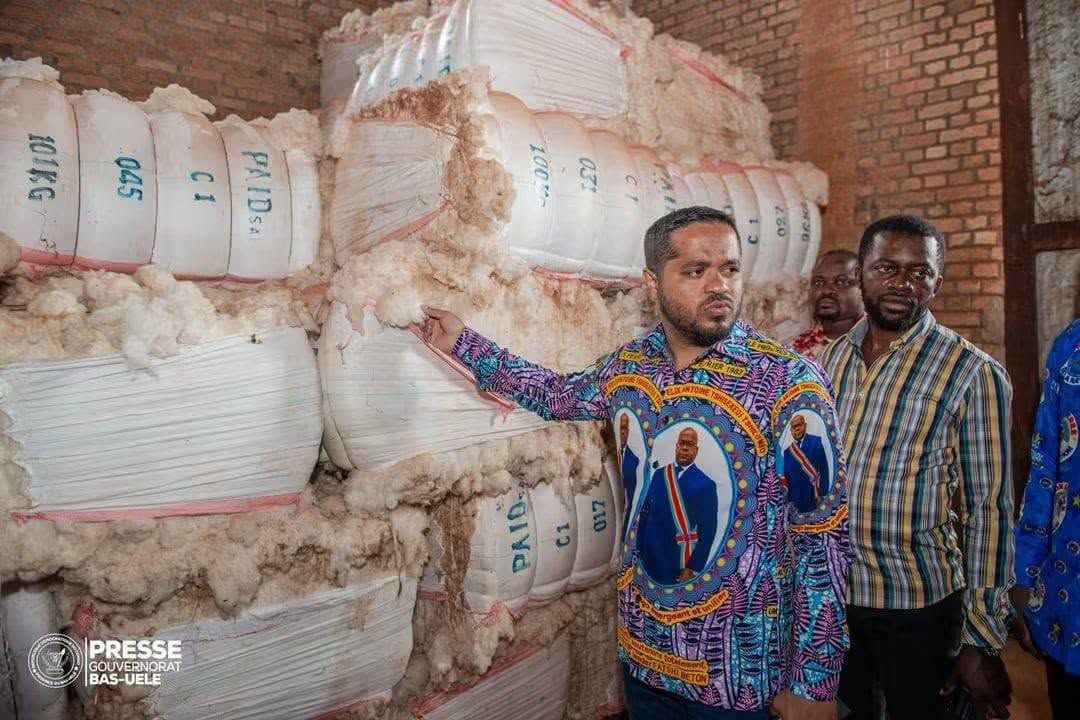
The governor of Bas-Uélé province, Mike-David Mokeni Amisi, stayed in Dingila as the guest of the Parc Agro-Industriel de Dingila SA (PAID SA). He toured the cotton plants and saw that the fibre processing equipment is operational again, following the restoration of the gins and bale presses.
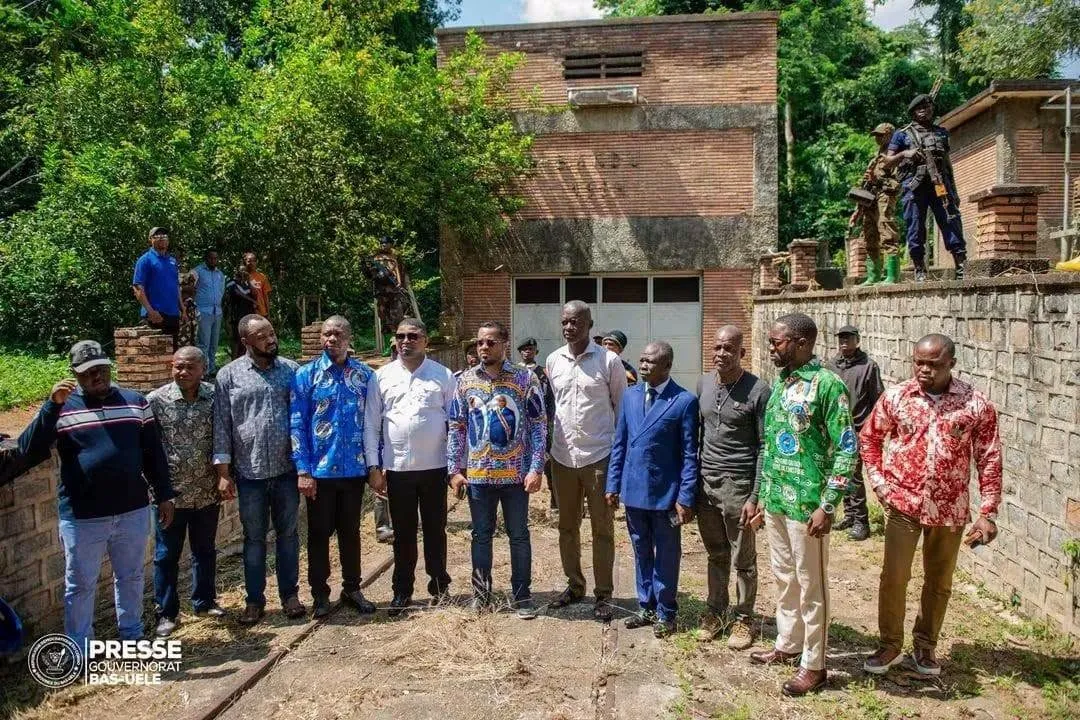
PAID SA’s teams are organised and trained for both agricultural development and plant operations. The Dingila, Bambessa, Titule and Makongo sites are operational, and several houses and offices in the village of Dingila, owned by the company, have been renovated.
Reviving the cotton sector
After more than 27 years at a standstill, production is resuming. Romain Felber, owner of PAID SA, together with his wife Odiane Lokako and his partners, met civil and traditional authorities and engaged with women producers’ associations. The immediate target is 2,000 tonnes of cotton this year.
Organised in modules of 2,400 ha of private plantations and up to 10,000 ha farmed by smallholders, the park aims for a capacity of 100,000 tonnes a year by 2050. The revival also extends to other perennial crops such as coffee and cocoa. An annual social plan will be carried out with local authorities and civil society, so that the benefits reach local communities over the long term.
Provincial support
The governor praised the efforts of PAID SA’s owners and thanked them for trusting in Bas-Uélé’s potential and investing heavily in the region despite many obstacles, the lack of roads above all. He described the revival of cotton, and of agriculture in general, as a major lever of identity and economic growth for Bas-Uélé and the wider former Orientale region. He did, however, regret the temporary closure of SOTEXKI in Kisangani, without which no cotton value chain is possible.
Photos: Bas-Uélé Governorate press office.
See the C-News post (in French)
See the business area Agriculture